Malaysia’s CBAM exposure is small but sharply divided. Sarawak hydro aluminium has a major physical carbon advantage that current CBAM does not price through electricity, while expanding Malaysian BF steel places direct emissions firmly inside the CBAM boundary.
Montenegro enters definitive CBAM after KAP's closure removed a 0.57 TWh industrial load, raising structural electricity exportability into Italy under a 0.979 tCO2e/MWh default worth about EUR 74/MWh. Surviving billet output relies on imported aluminium of unknown carbon origin.
Bahrain enters definitive CBAM with an aluminium-led EU border exposure, a 12 Mt pellet platform feeding Gulf DRI, and gas-based fertilisers under a wider emissions boundary. Vol 36 maps the Regulatory Carbon Split Screen, Visibility Inversion and Persistent GCC Carbon Ancestry.
Chile looks lightly exposed to CBAM: covered goods are a rounding error against copper. At product level it supplies 43% of EU potassium nitrate imports. Its 2026 default of 1.730 tCO2e/t sits 0.34 below Israel and Jordan on the default route, an advantage needing no audit.
Namibia enters the EU CBAM era with low current exposure but large green iron, hydrogen and ammonia projects already reshaping investment. The report maps dual industrial metabolisms, regulatory carbon identity, market conversion, and how more project value can remain in Namibia
Libya’s CBAM story is shaped by a coupled carbon archipelago: concentrated steel, fertiliser, cement and energy nodes linked by fragile infrastructure. The report explains how EU evidence rules create regulatory carbon identities and begin to stratify market access.
Mauritanian iron ore is declared to EU customs as CN 2601 11 00, non-agglomerated, which Annex I does not list. Under Regulation 2025/2547 it cannot be a precursor either. Volume 32 covers scope, default values, clinker carbon inflow, the domestic carbon tax and 2031.
Omani urea faces €140.6 per tonne under CBAM; Egyptian urea faces €39.5. Both come from steam methane reforming of gas. Egypt holds an Annex I entry and Oman does not. Volume 31 quantifies the cost of that absence, and finds no procedure by which a country may ask to be listed.
The EU's CBAM was expected to penalise American steel. It won't. Total US exposure stays near 0.02% of transatlantic trade, the heaviest per-tonne charge lands on ammonia, and the mechanism changes behaviour only at the firm level—led by CF Industries—not at the national one.
Mozambique's hydro-powered Mozal smelter drew the world's highest CBAM aluminium default value (3.198 tCO₂e/t), above coal-based China and India. This report traces the anomaly to drought-era crisis data locked into a permanent trade barrier, and quantifies the verified-data fix at €10.19/MWh.
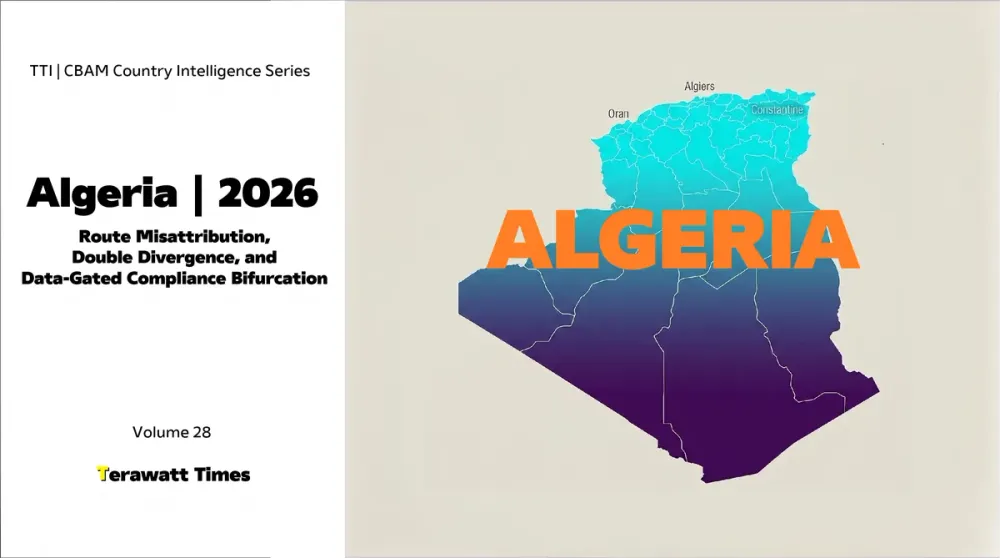
The EU's CBAM assigns Algeria's low-carbon DRI/EAF steel a blast-furnace default, raising its 2026 cost to €157.60/t versus €18.96 for verified data. This report quantifies the €139–256/t "Double Divergence" gap, its spread across Gulf producers, and how to close it.
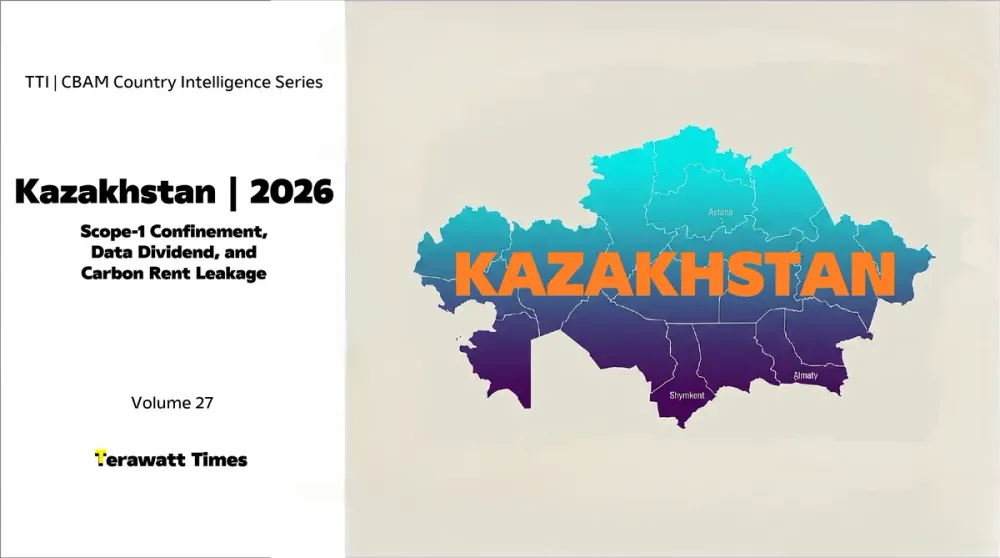
The EU CBAM's definitive phase began in 2026. Kazakhstan's embedded carbon liability is ~1.49 Mt/yr, far below trade-share estimates and concentrated in four firms. Three mechanisms follow: Scope-1 confinement, a EUR 74/t data dividend for Kazchrome, and EUR 179M/yr rent leakage.
Showing 12 of 122 total posts
Decoding the climate transition where innovation, capital, and strategy converge.