Nigeria's only CBAM exposure is urea, yet EU exports fell 92% before the carbon levy even began. The cause is not the 1% mark-up but compliance friction. This report introduces Compliance-Deficit Competitiveness Impairment (CDCI), showing the €42/t penalty drops to €12/t.
The EU’s CBAM and DPP are not separate hurdles. The "Gate Sequencing Effect" shows that early investment in CBAM carbon accounting acts as a critical prerequisite. Firms that rely on default values face compounding penalties and a multiplicative burden when DPP rules arrive.
Thailand's steel is almost all electric-furnace, yet CBAM fractures its exports by melt-origin, where the metal first solidified. Scrap-EAF rebar pays EUR 5.59/t in 2026; import-substrate flat steel and Indonesian-nickel stainless pay 25 to 100 times more.
The EU’s CBAM and DPP fall into a "proportionality trap." While technically precise, they lack political legitimacy by excluding non-EU suppliers from standard-setting. This voice deficit turns compliance into an instrument of power, escalating into formal WTO trade disputes.
In 2026 two Serbian steel plants face the same EU border under the same CBAM, yet a clean electric-arc producer pays 13x more once denied EU-accredited verification. This report maps Default Route Capture and Full-Spectrum Compliance Impedance across four institutional layers.
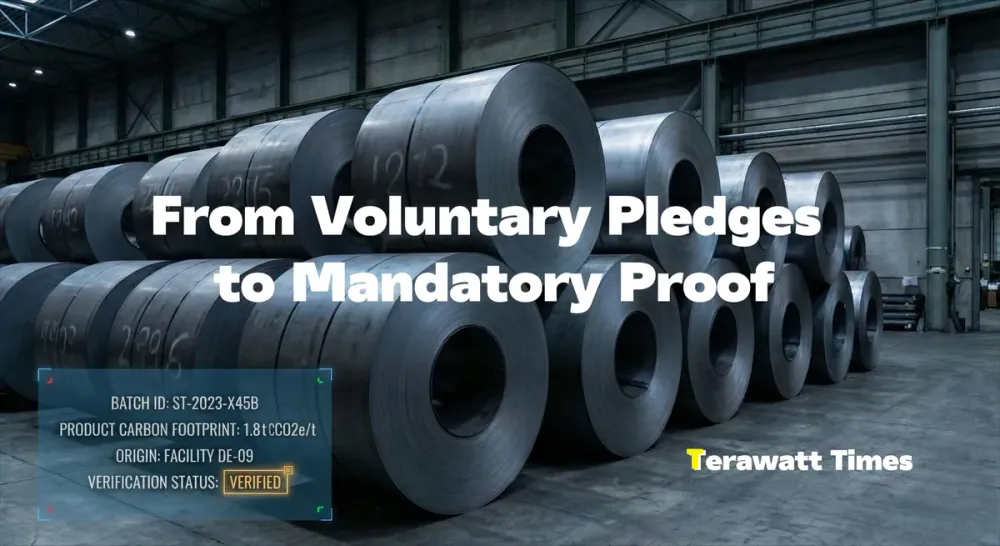
Climate policy has crossed the transparency threshold into irreversible mandatory proof. With a depleting carbon budget and a four-polar compliance pincer eliminating regulatory arbitrage, global firms are locked into a permanent, infrastructure-based verification regime.
CBAM's Moroccan DAP default (0.550) sits 38% below OCP's actual intensity. A 1% markup exemption and reshuffling from regulated DAP to exempt TSP compound the effect. Two new concepts — Default Value Umbrella and Product Mix Reshuffling — quantify a €25–29M/yr edge.
As voluntary climate pledges fail, this paper introduces the "Verification Imperium." Unlike the Brussels Effect, CBAM and DPP dictate evidence standards, not conduct. By controlling methodologies and digital systems, the EU locks global trade into a mandatory proof regime.
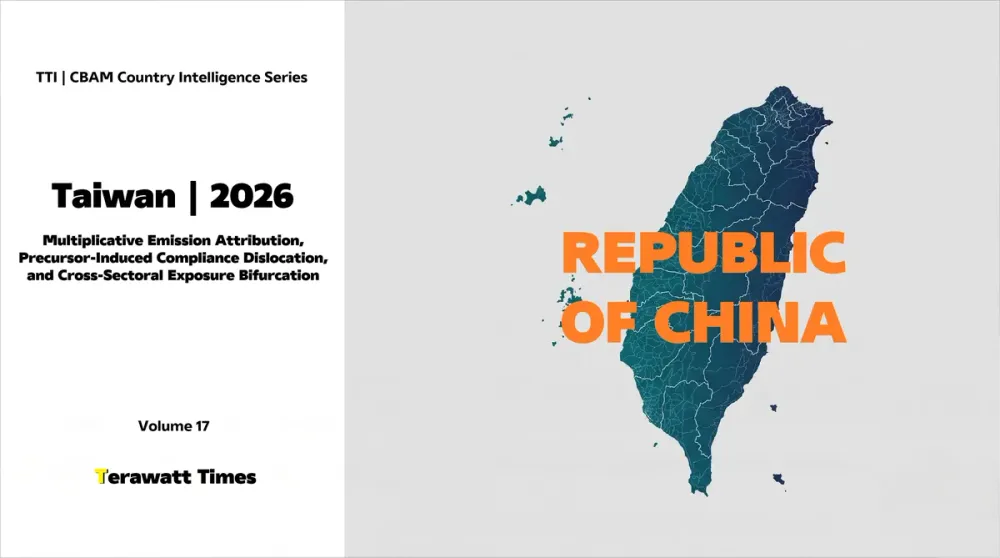
Regulation 2025/2621 assigns Taiwan the highest stainless steel default among 12 economies: 8.670, 171% above Indonesia. This report introduces PICD, explaining how Equation 62 transmits precursor emissions into products at ratios that overwhelm the factory's own footprint.
The four diagnoses across this CBAM series are not independent. They are the four positions of a single operational cycle every commensuration-based border instrument must traverse. Tested against the UK CBAM, the US Clean Competition Act, and a Turkish cement worked example.
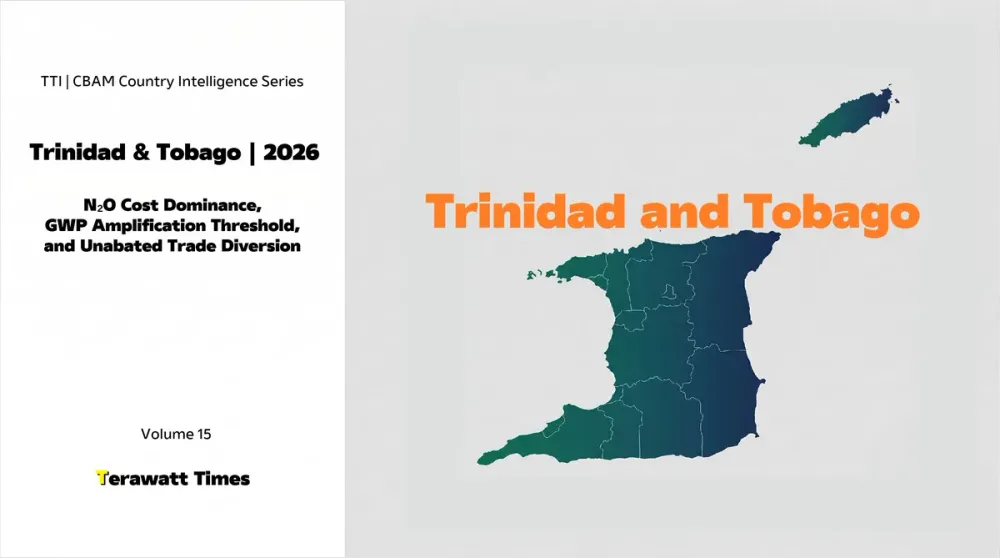
Trinidad's ammonia exporters face €163/t in undeductible carbon costs — €86 from gas escalation plus €77 from CBAM defaults. For UAN, N₂O's 265× GWP generates €67.54/t in unavoidable charges, triggering trade diversion to the US over abatement. CBAM achieves ledger decarbonization, not atmospheric.
CBAM operates on a silent prerequisite: measurability must exist before measurement can run. Three cases, Mozambique's Mozal, Zimbabwe's Manhize, Senegal's Sococim, show how default values translate capability deficits the climate regime treats as warranting support into border penalty.
Showing 12 of 122 total posts
Decoding the climate transition where innovation, capital, and strategy converge.