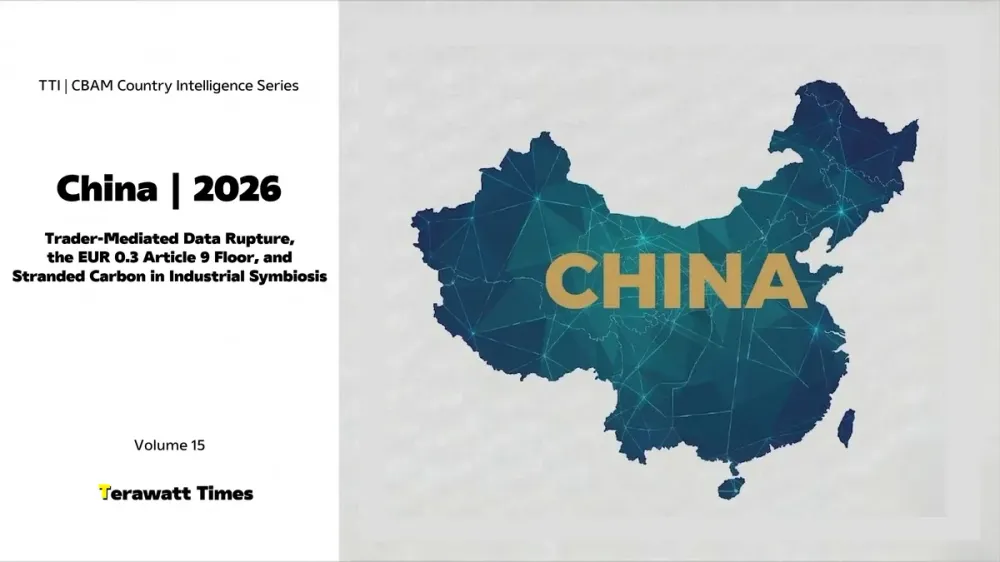
When CBAM rules cross into China's industrial reality, every output bends in a predictable direction. We name this the CBAM Refraction Effect: a systematic divergence driven by the gap between factual and verifiable compliance, quantified across five parallel dimensions.
CBAM deducts carbon prices paid but not the capital that reduced the emissions, though the two pathways are economically equivalent. The paper traces the paradox to commensuration selectivity across EU, UK, US, and Canadian border adjustments, and develops PPE as the response.
Egyptian CBAM exposure in 2026 spans €244/tonne across five commodities. Steel: €213/t gap (Compliance Pathways Decompensation). Urea: −€31/t (Default Value Shelter). Cement/aluminium/ammonia cluster near zero. TTI names the combined pattern Full-Spectrum MRV Divergence.
CBAM Article 9 allows deductions for carbon costs "effectively paid in any form," but Commission practice recognizes only carbon taxes and ETS. This paper analyzes the gap across China, India, Turkey, Brazil, and South Africa, and proposes a precision-diversity translation framework.
Mexico's 97%-recycled steel pays more CBAM than hypothetical blast furnaces. TTI Vol.13 models four facilities under Reg 2025/2620 benchmarks: Deacero €67.9/t, TenarisTamsa €105.3/t, hypothetical BF €44.7/t. The mid-transition reverse penalty concentrates in 2026–2030.
The EU CBAM's demand for uniform carbon metrics creates four structural blind spots: a recognition gap, a clean production paradox, ignored development differences, and design rigidity. This article proposes a 3-step translation-enhanced reform to restore carbon tradability.
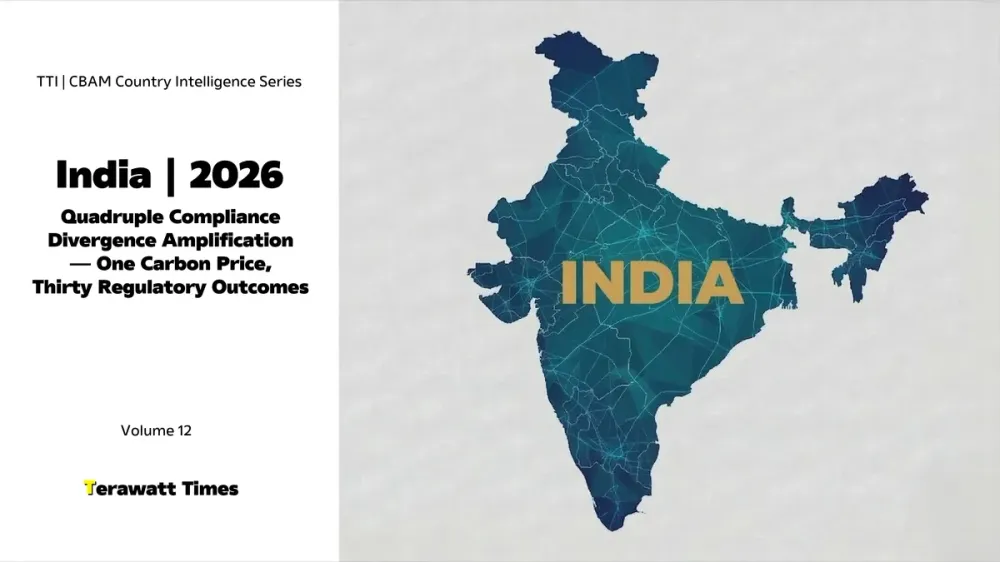
NEW: India faces the widest CBAM cost spread of any exporter—€0 for green hydrogen to €230+/t for MSME steel on defaults. Not emissions but rule architecture. TTI maps the four-dimensional divergence with BFG stoichiometry, enterprise cost ranking, and three testable predictions.
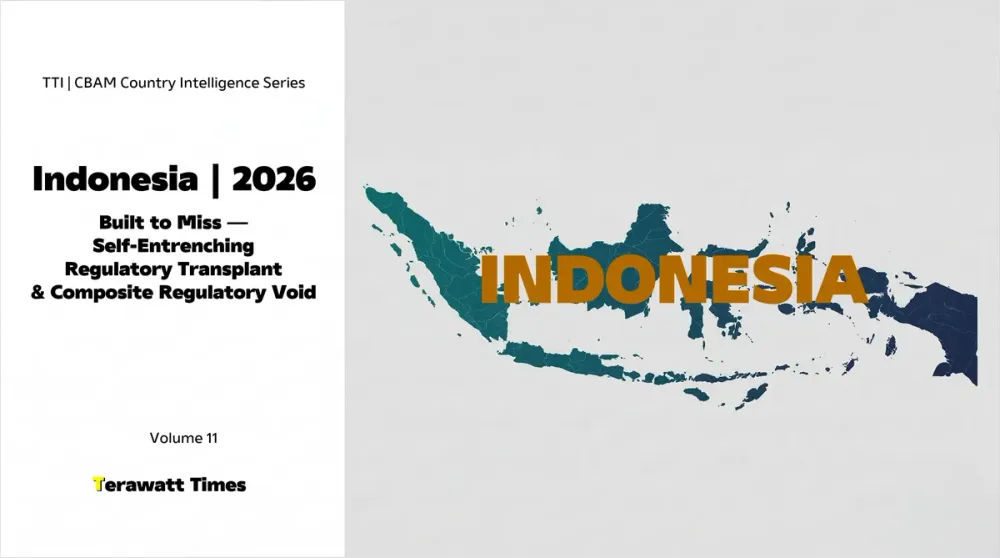
Indonesia's CBAM defaults produce €321/t on NPI and €595/t on steel slabs, exceeding operating profit from day one. Five misalignment dimensions traced to one policy root. Two concepts: Composite Regulatory Void and Self-Entrenching Regulatory Transplant.
Nature videos let us visit extraordinary places without leaving home. But can watching them sometimes reduce our desire to go outside? Drawing on his own research, Daniel Li explores why digital nature may inspire real adventures for some people and feel like enough for others.
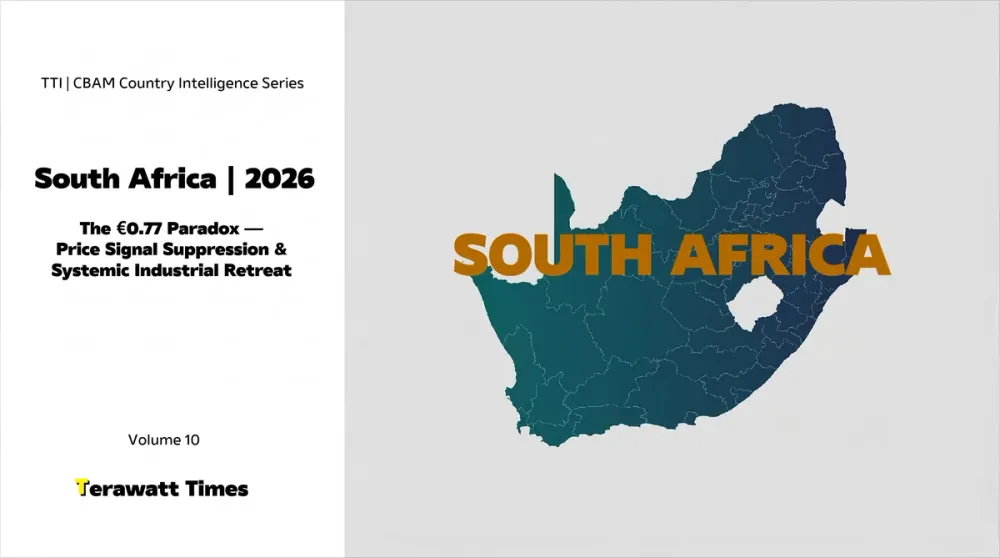
South Africa is the CBAM-exposed economy where carbon price signal suppression and grid collapse intersect. A nominal R308/tCO₂ carbon tax delivers €0.77 effective rate. 53 of 62 ferro-alloy furnaces offline. Chrome ore exports at 20.55Mt record. This is retreat, not adaptation.
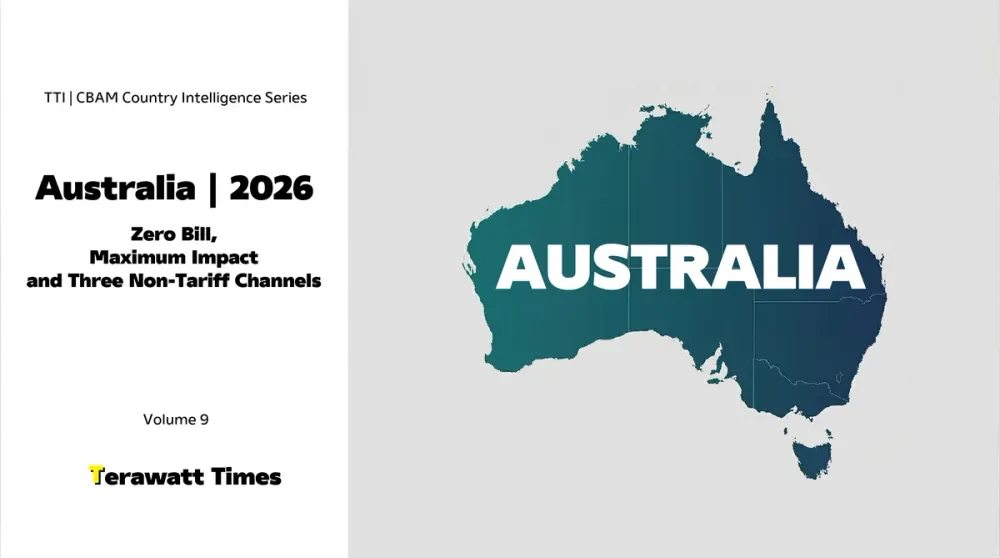
Despite a negligible €2.3M direct CBAM bill, Australia faces imminent heavy industry closures. This paradox is driven by three non-tariff channels: parent-company portfolio optimisation, Asia-Pacific premium widening, and institutional diffusion. Six timelines converge to make 2028 a systemic cliff.
Vanadium faces a violent repricing inflection analogous to lithium’s 2014 boom, but more durable. With 70% of supply locked as a steel by-product incapable of expanding, and demand surging from VRFB storage, EU CBAM, and nuclear fusion, the market presents an unpriced, asymmetric risk-reward.
Showing 12 of 122 total posts
Decoding the climate transition where innovation, capital, and strategy converge.